Introduction
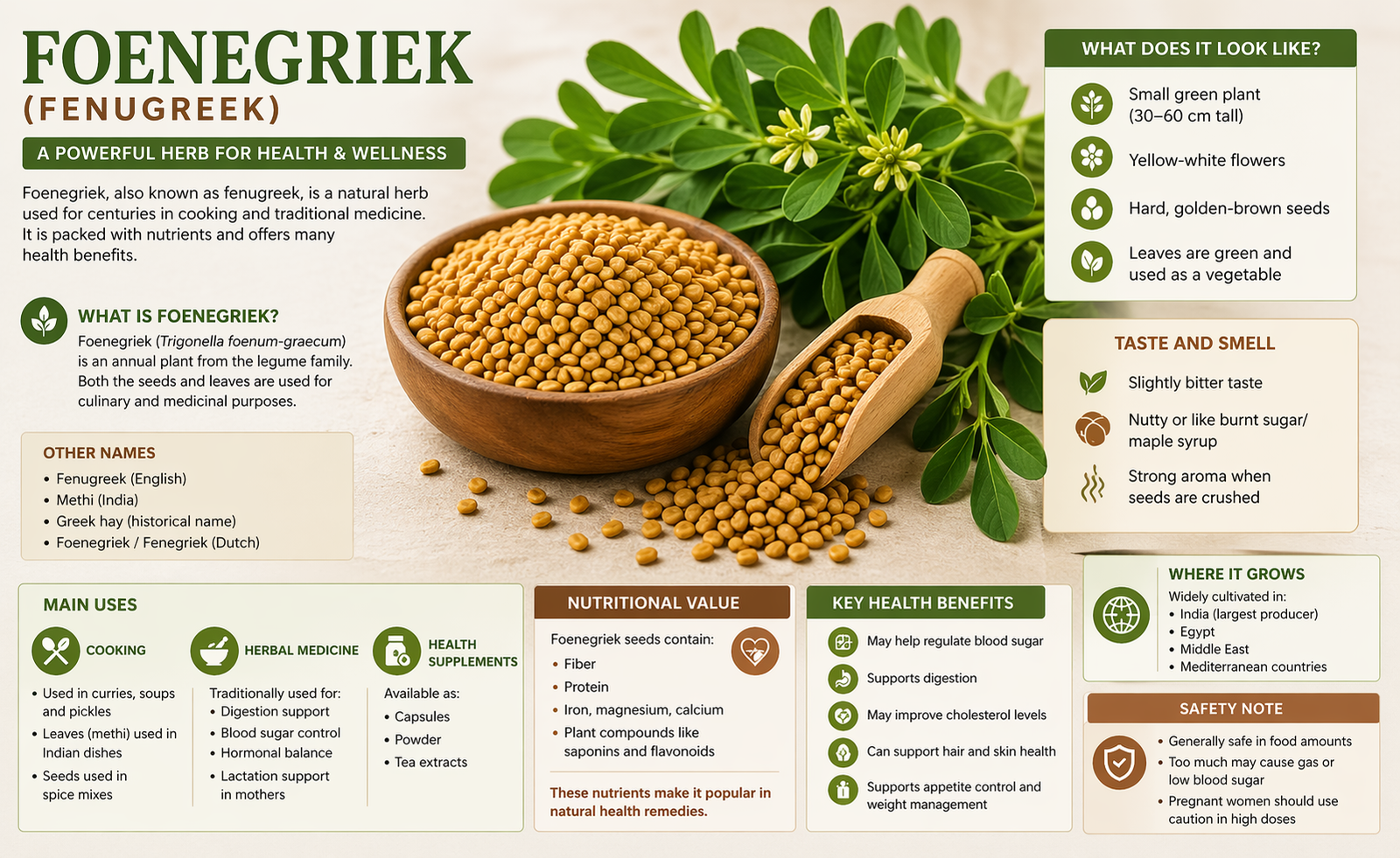
Foenegriek, more commonly known in English as fenugreek, is a powerful herb and spice that has been used for thousands of years in cooking, traditional medicine, and natural healing practices. Its scientific name is Trigonella foenum-graecum, and it belongs to the legume family, which also includes beans and lentils.
Although it may not be as widely recognized in some parts of the world, foenegriek plays an important role in many cultures, especially in South Asia, the Middle East, and the Mediterranean region. It is valued for both its nutritional richness and medicinal properties, making it one of the most versatile natural plants used by humans.
This article provides a complete overview of foenegriek, including its origin, forms, nutritional content, health benefits, culinary uses, side effects, and frequently asked questions.
What is Foenegriek?
Foenegriek is a small herbaceous plant that grows up to 30–60 cm tall. It produces green leaves, small yellowish-white flowers, and hard golden-brown seeds. Both the seeds and leaves are used for different purposes.
- Leaves are known as “methi” in South Asia and are commonly eaten as vegetables.
- Seeds are used as a spice and herbal remedy.
The plant has a strong aroma and a slightly bitter taste, which becomes more noticeable when the seeds are roasted or crushed.
Foenegriek is widely used in:
- Cooking
- Herbal medicine
- Dietary supplements
- Traditional healing systems such as Ayurveda and Unani medicine
Origin and History
Foenegriek has a long history dating back thousands of years. It is believed to have originated in the Mediterranean region and parts of Western Asia.
Historical records show that:
- Ancient Egyptians used foenegriek in medicine and embalming practices.
- Greek and Roman civilizations used it as both animal feed and herbal treatment.
- In India, it has been used for centuries in Ayurveda for digestion, strength, and hormonal balance.
Today, it is cultivated in many countries including India (largest producer), Egypt, Pakistan, and parts of Europe.
Forms of Foenegriek
Foenegriek is available in several forms, each with different uses:
1. Foenegriek Seeds
- Small, hard, and golden-brown
- Most commonly used form
- Used in cooking and herbal remedies
2. Foenegriek Leaves
- Fresh green leaves known as methi
- Used as a vegetable in curries, soups, and breads
3. Foenegriek Powder
- Ground seeds
- Used in spice mixes and supplements
4. Foenegriek Tea
- Seeds are boiled in water
- Consumed for digestion and health support
5. Capsules and Extracts
- Modern supplement form
- Used for health benefits like blood sugar control
Nutritional Value
Foenegriek seeds are highly nutritious and contain several important compounds:
- Protein
- Dietary fiber
- Iron
- Magnesium
- Calcium
- Vitamin B6
- Antioxidants
It also contains plant compounds such as:
- Saponins
- Flavonoids
- Alkaloids
These nutrients make foenegriek useful for overall health, metabolism, and energy support.
Health Benefits of Foenegriek
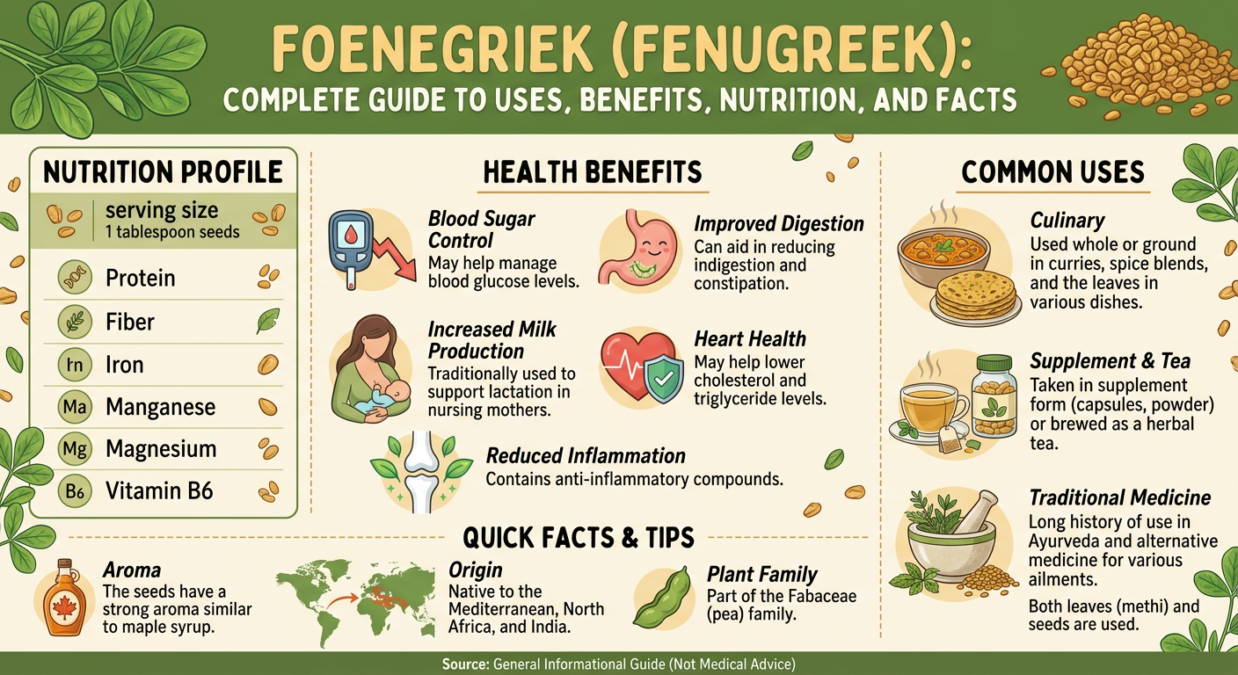
Foenegriek is widely studied and traditionally used for its healing properties. Below are some of its key benefits:
1. Supports Blood Sugar Control
Foenegriek may help regulate blood sugar levels by improving insulin function. It is often used by people with or at risk of type 2 diabetes.
2. Improves Digestion
The high fiber content in foenegriek helps:
- Relieve constipation
- Improve gut health
- Support smooth digestion
3. Helps in Hormonal Balance
Foenegriek is known to support hormonal health, especially in women. It is sometimes used to help with menstrual discomfort.
4. Supports Breast Milk Production
In traditional medicine, foenegriek is used by breastfeeding mothers to increase milk supply.
5. May Help with Cholesterol Levels
Some studies suggest foenegriek may help reduce bad cholesterol (LDL) and improve heart health.
6. Supports Weight Management
Foenegriek’s fiber content helps increase fullness, which may reduce appetite and support weight control.
7. Improves Skin and Hair Health
Foenegriek is used in natural beauty treatments for:
- Reducing dandruff
- Promoting hair growth
- Improving skin texture
Culinary Uses of Foenegriek
Foenegriek is a popular spice in many cuisines around the world.
In Cooking:
- Added to curries for flavor
- Used in spice blends like curry powder
- Added to pickles for aroma and preservation
- Used in bread recipes in Middle Eastern cuisine
In Indian Cuisine:
- Fresh leaves (methi) are used in dishes like “methi paratha”
- Seeds are tempered in oil to flavor lentils and vegetables
Flavor Profile:
- Slightly bitter
- Nutty when roasted
- Sweet aroma when cooked
Side Effects and Safety
While foenegriek is generally safe when consumed in food amounts, excessive use may cause side effects.
Possible side effects include:
- Bloating or gas
- Mild diarrhea
- Lowered blood sugar levels (in high doses)
- Allergic reactions in rare cases
Precautions:
- Pregnant women should avoid high doses
- People on diabetes medication should consult a doctor
- Allergic individuals should use carefully
Foenegriek in Traditional Medicine
Foenegriek has been a key ingredient in traditional healing systems:
Ayurveda
Used for:
- Digestion
- Strength
- Hormonal balance
Unani Medicine
Used for:
- Respiratory issues
- Weakness
- Metabolic health
Chinese Medicine
Used for:
- Kidney support
- Energy enhancement
Modern Scientific Interest
Modern research has shown interest in foenegriek due to its:
- Blood sugar regulation potential
- Anti-inflammatory properties
- Antioxidant activity
- Possible effects on cholesterol and heart health
However, more clinical studies are still needed to confirm many traditional claims.
How to Use Foenegriek
Here are common ways to use it:
- Soak seeds overnight and drink the water in the morning
- Add seeds to cooking oil for flavoring dishes
- Use powdered seeds in smoothies or herbal drinks
- Cook fresh leaves in vegetables or flatbreads
- Take supplements after consulting a healthcare professional
Conclusion
Foenegriek is a powerful natural herb with a long history of culinary and medicinal use. It is valued for its rich nutritional profile, potential health benefits, and versatility in cooking. From improving digestion and blood sugar control to supporting hair and skin health, foenegriek continues to be an important part of traditional and modern wellness practices.
However, like any natural remedy, it should be used in moderation and with awareness of possible side effects. When used properly, foenegriek can be a beneficial addition to a healthy lifestyle.
FAQs about Foenegriek
1. What is foenegriek used for?
Foenegriek is used for cooking, improving digestion, supporting blood sugar control, and promoting overall health.
2. Is foenegriek safe to eat daily?
Yes, in normal food amounts it is safe. However, high doses should be avoided without medical advice.
3. Can foenegriek help with weight loss?
It may help support weight management by increasing fullness and reducing appetite.
4. What does foenegriek taste like?
It has a slightly bitter and nutty flavor, which becomes stronger when roasted or crushed.
5. Who should avoid foenegriek?
Pregnant women, people with low blood sugar, and those with allergies should use it cautiously or consult a doctor first.